
How Deep Can You Dig Before Calling 811 in Texas?
Sixteen inches, if you are using any kind of powered equipment. That number is written into Texas law, and it catches people off guard because it is shallower than most expect.
What the law actually says
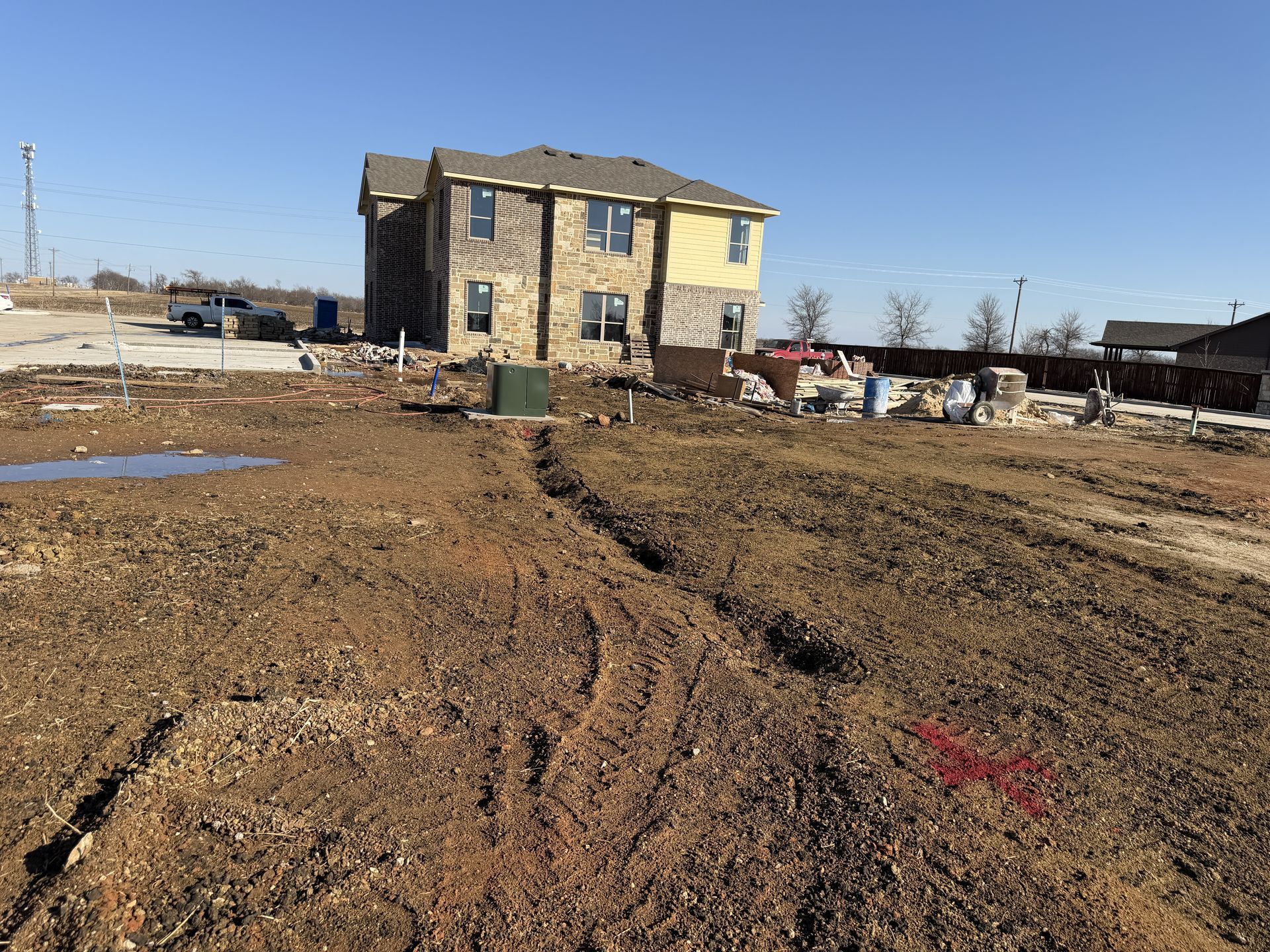
Texas Utilities Code Section 251.002 defines excavating as using explosives or a motor, engine, hydraulic or pneumatically powered tool, or other mechanized equipment to remove or otherwise disturb soil to a depth of 16 or more inches.
Two things follow from that wording, and both matter on a job site.
The 16 inches is tied to powered equipment. A shovel is not a motor, an engine, or a mechanized tool. Hand digging a post hole falls outside the statutory definition regardless of how deep you go.
Anything mechanized at 16 inches or deeper triggers the notice requirement. Auger, trencher, backhoe, skid steer, tiller, directional drill, vacuum truck. If it has an engine and it is going 16 inches down, you owe the call.
When to call
No earlier than 14 days before you start, and no later than 48 hours before, excluding Saturdays, Sundays, and legal holidays. Call too early and your marks fade before the equipment arrives. Call Thursday afternoon for a Monday start and you have not actually given 48 business hours.
The call is free. There is no charge to the excavator for a standard locate request.
The part that gets people hurt
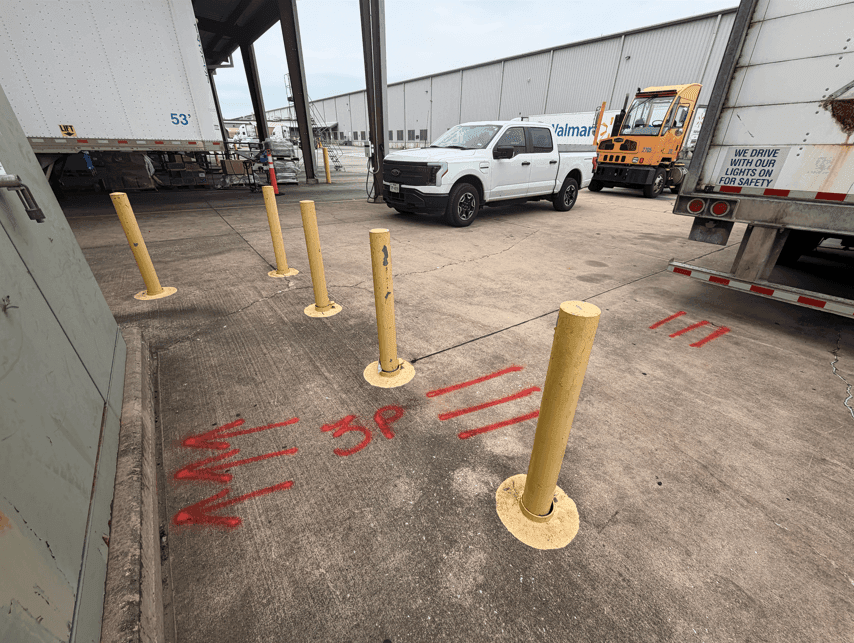
Here is what the law does not do for you.
Section 251.003 exempts several categories of underground facility from the one-call system. Subsection (3) covers any underground facility that serves only the owner or the owner's tenant and is located solely on the owner's property.
Read that twice, because it is the whole ballgame. Private lines are outside 811 by statute. Your locator is not being lazy and did not miss anything. Those lines were never in scope.
On a typical site, that leaves all of this unmarked:
- The water service line past the meter
- The sewer lateral from the building to the main
- Septic tanks and drain field laterals
- Propane lines from the tank to the house
- Irrigation mains and valve wiring
- Well lines and the electric feed to the pump
- Site and landscape lighting
- Power and data running to a shop, barn, gate, pool equipment, or second building
- Fiber and conduit between buildings on a campus or plant
On a commercial site that list is often the majority of what is in the ground. On a school, hospital, or industrial property, nearly everything inside the property line is private.
Does 811 locate water lines?
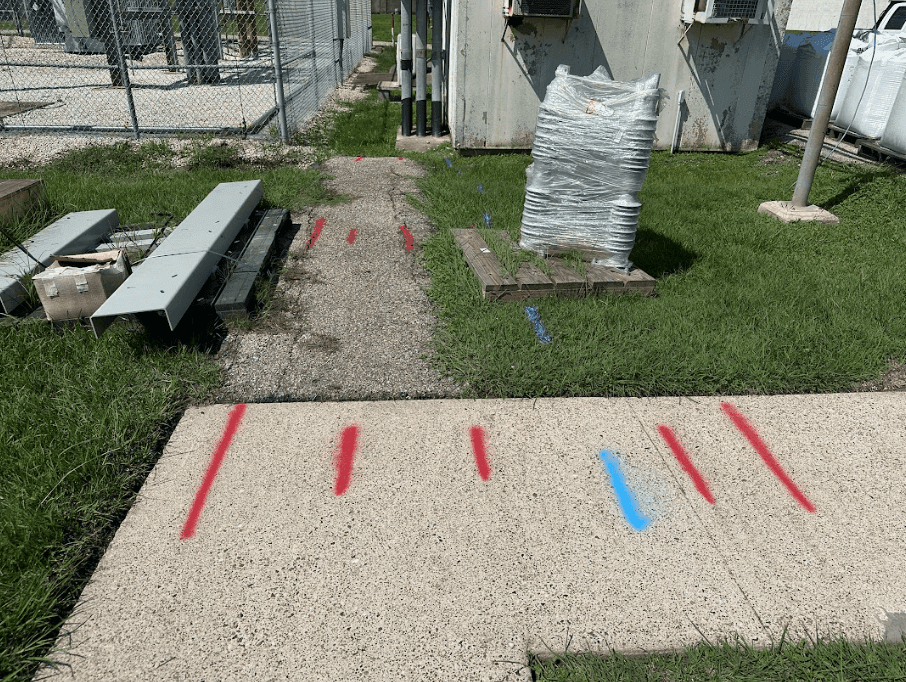
The public main in the street, yes. Your service line from the meter to the building, no. That is your line on your property, which puts it squarely under the exemption above.
Same answer for sewer. The main gets marked, your lateral does not.
Two more questions we get constantly
How accurate are the marks? Locate marks give you a horizontal path, not a depth. Nobody guarantees depth from a surface locate, and the line itself can sit off to one side of the paint. Expose by hand or with a vacuum truck once you get close.
How long are the marks good for? As long as they are visible and undisturbed. Texas weather takes paint off faster than most crews plan for, and one pass of a grader erases it completely. If the paint or flags are gone, or the site has been reworked since the locate, re-notify before you keep digging.
What actually keeps you out of trouble
Call 811 for the public lines. It is the law, it is free, and there is no reason to skip it.
Then get the private lines located separately, because nobody else is going to. That gap is what produces most of the strikes we get called out to after the fact. A clean 811 ticket, a confident operator, and an unmarked two inch water service or a live feed to a light pole sitting 14 inches down.
If you are digging in Texas and want everything inside the property line marked before the equipment shows up, that is the work we do.