
How to Find Your Septic Tank: 5 Ways That Work
Your septic tank is almost certainly closer to the house and shallower than you think. Most sit 10 to 25 feet from the foundation with the top of the lid 6 to 24 inches below grade, which means you can usually find it in an afternoon without tearing up the yard.
1. Pull the county permit before you touch a shovel
This is the step most people skip and the one that saves the most digging.
Every septic system in Texas is permitted through a local authorized agent, usually the county environmental health or development services office. If your system went in after September 1989, the file should include a site diagram showing where the tank sits, where the drain field runs, and the setbacks from the house and property lines. Copies generally run $10 to $25.
Look up your county's authorized agent through TCEQ, then call with your property address, the owner name, and the legal description off your county appraisal district record. If the county comes up empty, TCEQ keeps historical on-site sewage facility records by county and region. They can be reached at (512) 239-3799 or [email protected].
One warning about older rural lots. Plenty of systems out in the Hill Country and north of Conroe went in before permitting caught up, and there is simply no paper on them. If that is your situation, go to step 2.
2. Follow the sewer line out of the house
Find where the main sewer line leaves the building. In a pier and beam house that is a four inch pipe in the crawlspace. On a slab, look for the cleanout, usually a capped pipe standing a few inches out of the ground near a bathroom or kitchen wall.
Note the direction it heads and walk that line into the yard. Sewer lines run straight and downhill far more often than not, and the tank is usually the first thing they hit.
3. Read the ground
After a dry stretch, a septic tank leaves a fingerprint. Look for:
- A rectangle of grass a different color from everything around it, roughly five by eight feet
- A shallow depression, or a low spot that holds water after rain
- A slight mound, if the tank was set high
- Grass that browns out first over the tank and stays greener over the drain field
Walk the yard early in the morning when the light is low, and walk across the slope rather than down it. Contours show up better that way.
4. Probe, carefully
Once you have a likely area, a soil probe or a length of rebar will confirm it. Push down every couple of feet in a grid until you hit something flat and solid. Concrete and fiberglass both feel nothing like rock.
Two rules. Go slow and stop the moment you feel resistance, because you do not want to punch through an aging fiberglass lid. And stay out of the strip between the house and the meter until you know what else is buried there.
5. Have it located electronically
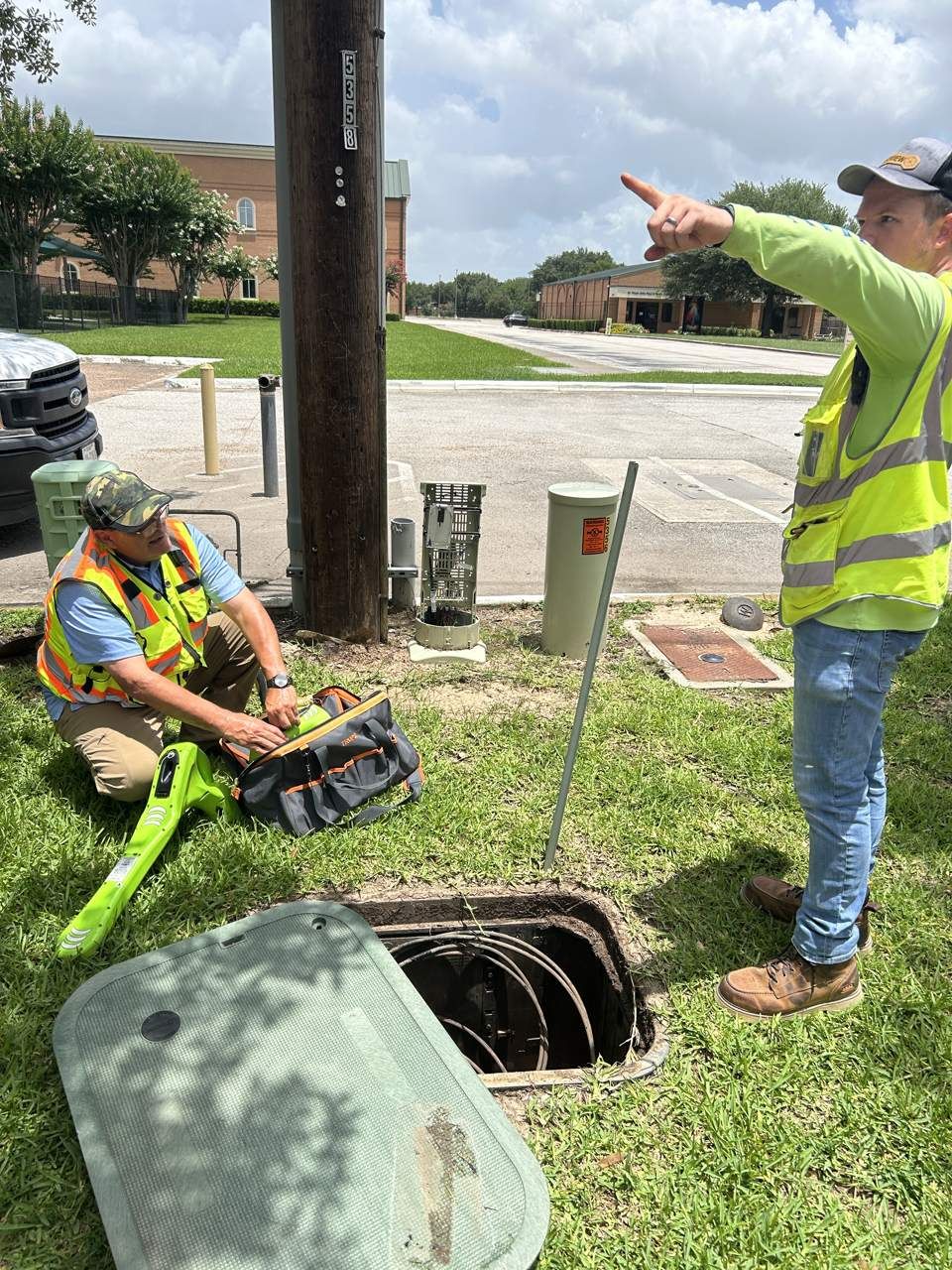
If the records are gone, the lot is large, or somebody has poured a driveway or built a deck over the tank since it went in, probing turns into guesswork. That is when a locate earns its money.
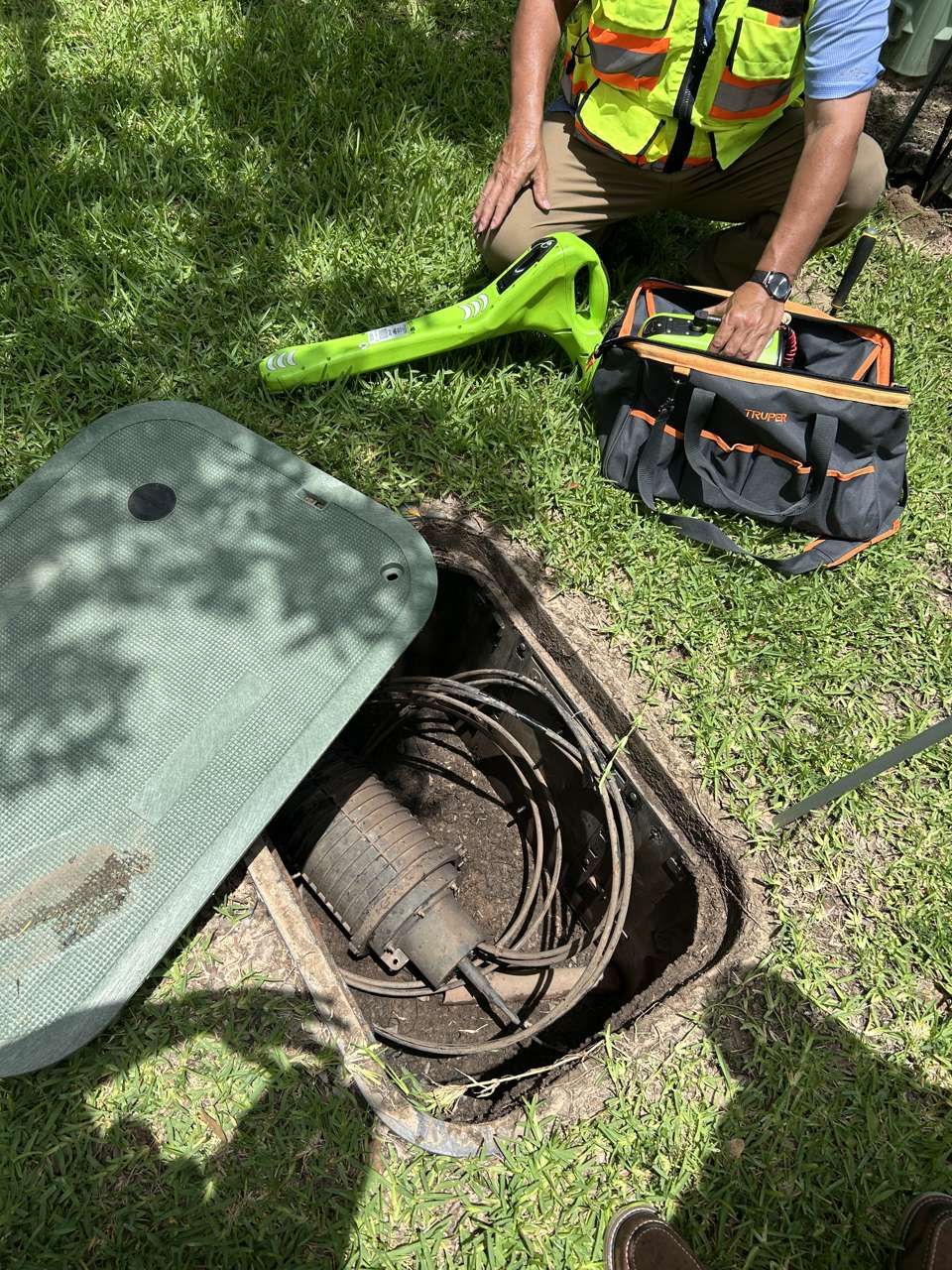
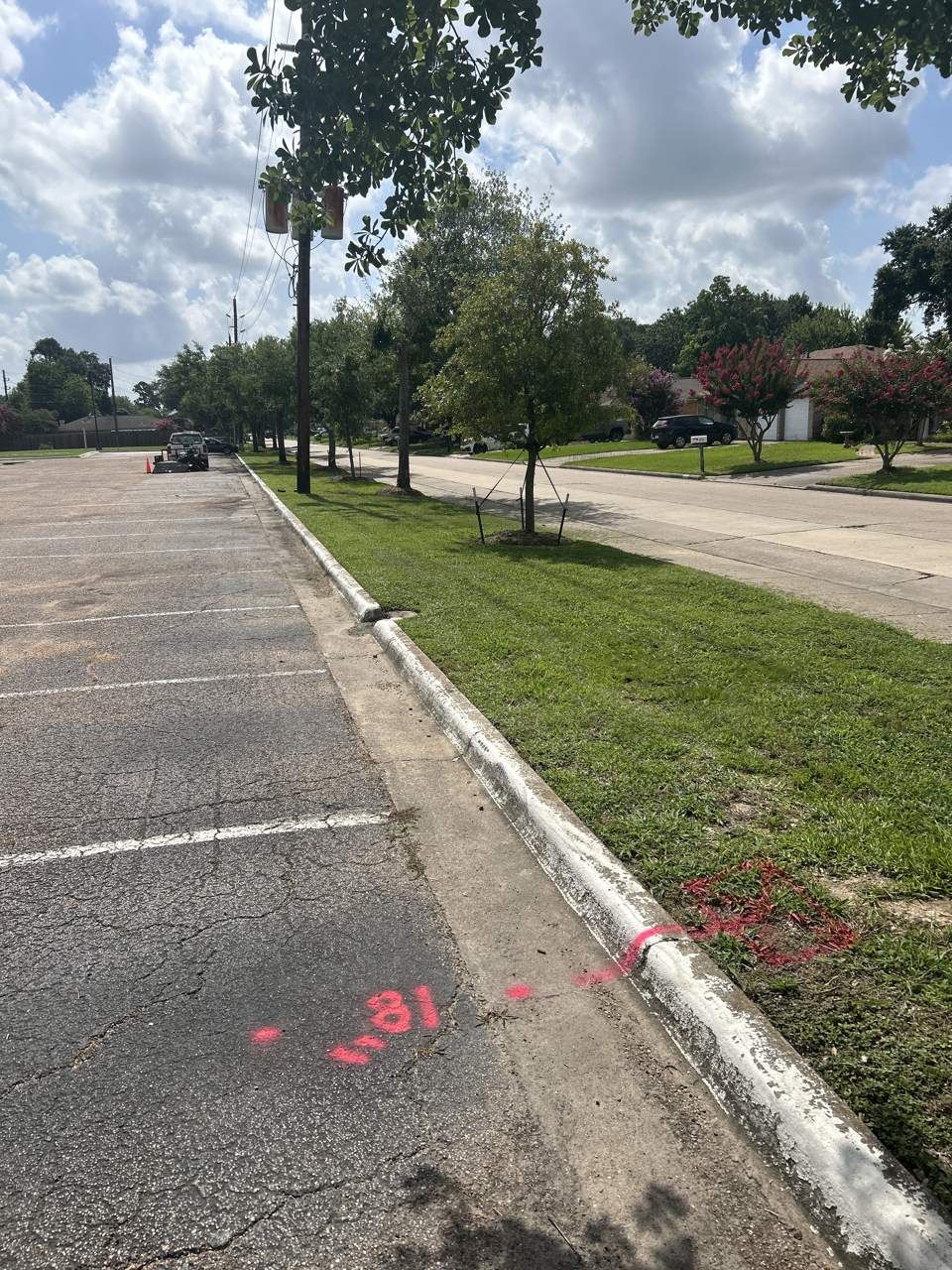
We run ground penetrating radar and electromagnetic equipment to find the tank, the lid, and the laterals, then mark all of it on the surface. On a typical residential lot that is an hour or two. You get paint on the ground and, if you want one, a drawing you can hand to whoever comes next.
Worth doing before you:
- Build an addition, shop, pool, or driveway
- Plant trees anywhere near the drain field
- Close on a property with an unknown system
- Schedule a pump-out on a tank nobody has opened in years
Two things not to do
Do not dig blind near the house. The stretch between your foundation and the meter is where the water service, the gas line, the electric feed to a well or pump house, and the irrigation mains all run. None of those get marked when you call 811, because private lines on your own property sit outside the one-call system by statute.
Do not drive equipment over a tank you have not located. Old concrete and fiberglass lids fail under load, and people and livestock have gone into tanks that way. If a contractor is bringing a skid steer or a loaded truck into the yard, know where the tank is first.
The short version
Start with the county permit. If that comes up dry, follow the sewer line and read the ground, then probe to confirm. Call for a locate when the yard has changed since the system went in, or when you are about to build.
If you are in Central or East Texas and want the tank, lid, and laterals marked before you break ground, get in touch.