
What Is a Post-Tension Slab? Why You Cannot Drill It
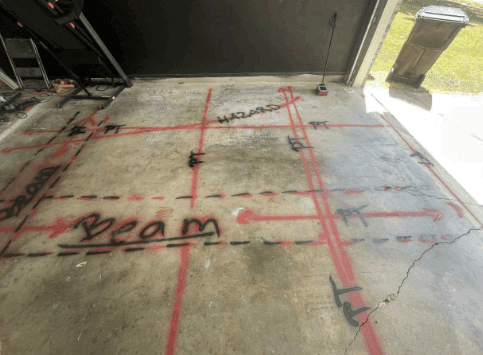
A post-tension slab is concrete that gets squeezed after it cures. Steel cables run through the slab inside plastic sheathing, and once the concrete is strong enough, a hydraulic jack pulls each cable tight and locks it against an anchor at the slab edge. The steel stays loaded permanently and holds the concrete in compression.
That matters because concrete is strong in compression and weak in tension. Rebar handles tension passively, only once the concrete has already begun to crack. Post-tensioning handles it actively, before there is a crack to resist at all.
Why Texas builds this way
Expansive clay. Soil that swells and shrinks with moisture wants to bend a slab, and a slab held in compression fights that far better than a passively reinforced one. Post-tensioning also lets you pour thinner, span farther, and cut down on control joints.
If you are in a Texas building put up in the last few decades, especially on clay, there is a real chance you are standing on one right now.
How to tell if you have one
- A stamped or cast warning at the slab edge or in the garage, usually some version of POST-TENSIONED SLAB, DO NOT CUT OR DRILL
- Small patched pockets spaced along the perimeter, a few inches across, where the anchors were grouted over after stressing
- Structural drawings calling for tendons, or a post-tensioning shop drawing in the project file
If none of that is available and the building is the right age and region, treat it as post-tensioned until somebody proves otherwise.
Where the cables sit
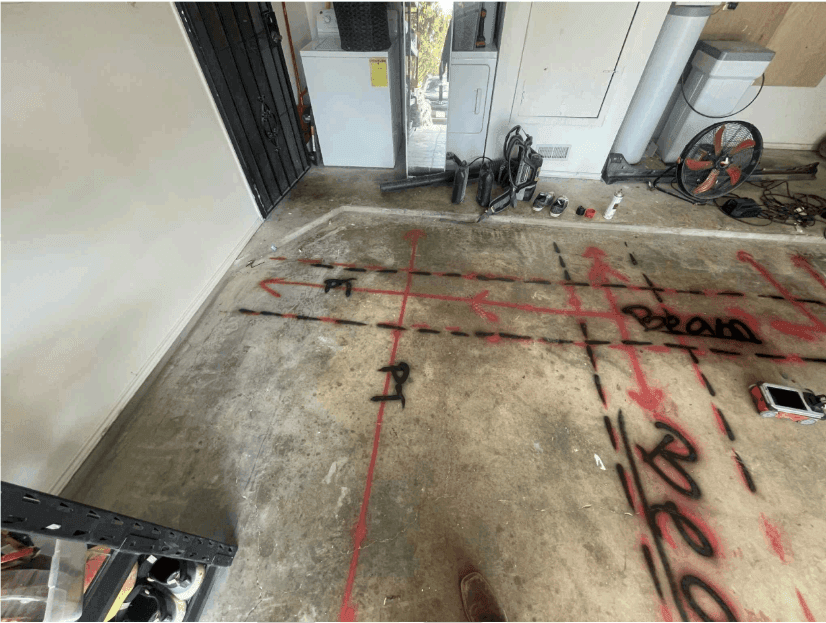
Roughly mid-depth, and they do not run flat. Tendons are draped in a parabola, low through the middle of a span and higher over the supports, so the depth at any given spot depends on where you are standing relative to that span.
Spacing, depth, and layout are engineered per project. There is no rule of thumb safe enough to drill against, and shop drawings are a guide rather than an as-built record, because tendons shift during the pour.
What happens if you cut one
Each tendon carries somewhere in the range of 24,000 to 33,000 pounds.
Sever a loaded tendon and it releases all of that at once. The cable recoils, it blows concrete out of the slab, and it can seriously injure or kill whoever is holding the saw or the core rig. There are documented fatalities from exactly this.
The structural side is nearly as bad. You have removed a load path the slab was designed around, and the fix is an engineered repair rather than a patch. Depending on where the break falls, that can mean shoring, epoxy, external post-tensioning, or replacing a section.
So can you ever drill or core one?
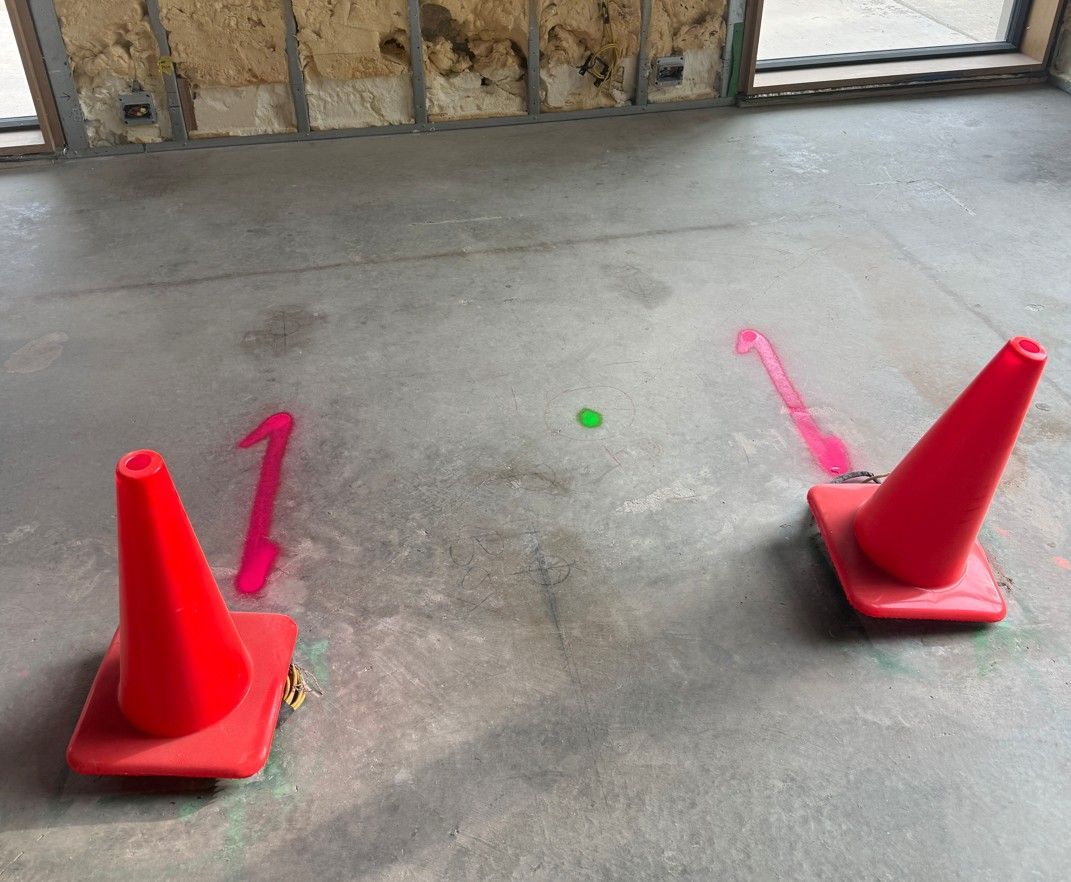
Yes, routinely. It takes two steps, in this order.
Locate the steel. Ground penetrating radar maps tendons, rebar, conduit, and slab thickness, and we mark the clear zones on the surface at the actual spot you want to work.
Get the hole approved. Knowing where the steel is tells you where there is no steel. It does not tell you whether a hole in that location is structurally acceptable. That call belongs to the engineer of record, and on anything past a small anchor bolt you want it in writing.
Skipping either step is where this goes wrong. Scanning without engineering approval gets you a hole that misses the cables and still compromises the slab. Engineering approval without scanning gets you an acceptable location on paper and a severed tendon in the field, because the drawing and the slab disagree.
When to scan
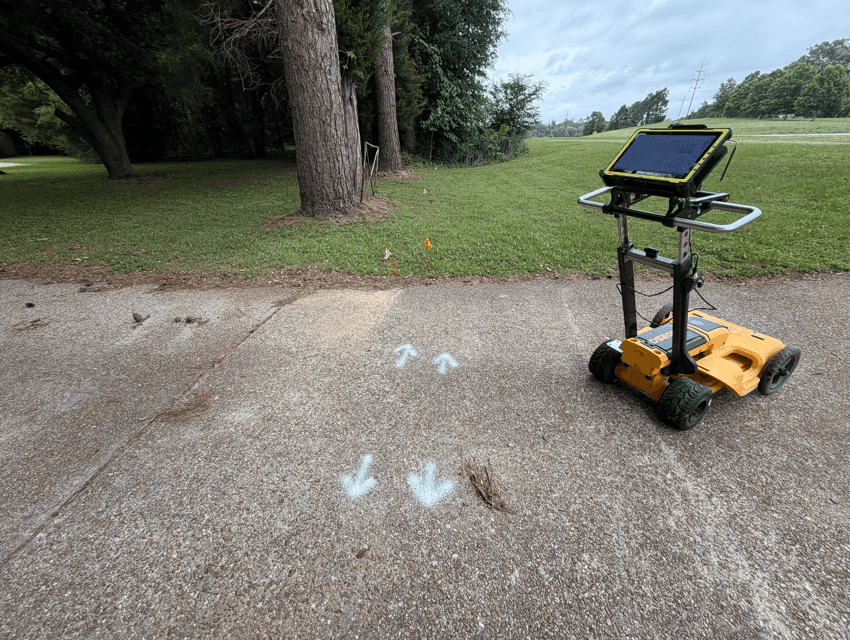
- Coring for plumbing, floor drains, conduit, or dowels
- Setting anchors for equipment, racking, handrail, or a car lift
- Saw cutting for a trench, elevator pit, or slab opening
- Demolition on or next to a post-tensioned deck
- Any time the drawings are missing, unclear, or do not match what you see on site
It is a couple of hours of scanning against a repair that runs into five figures and a real injury risk.
If you have a post-tension slab in Texas and need the tendons marked before you drill, we scan it.