
Stop Guessing at Depth. Expose the Line.
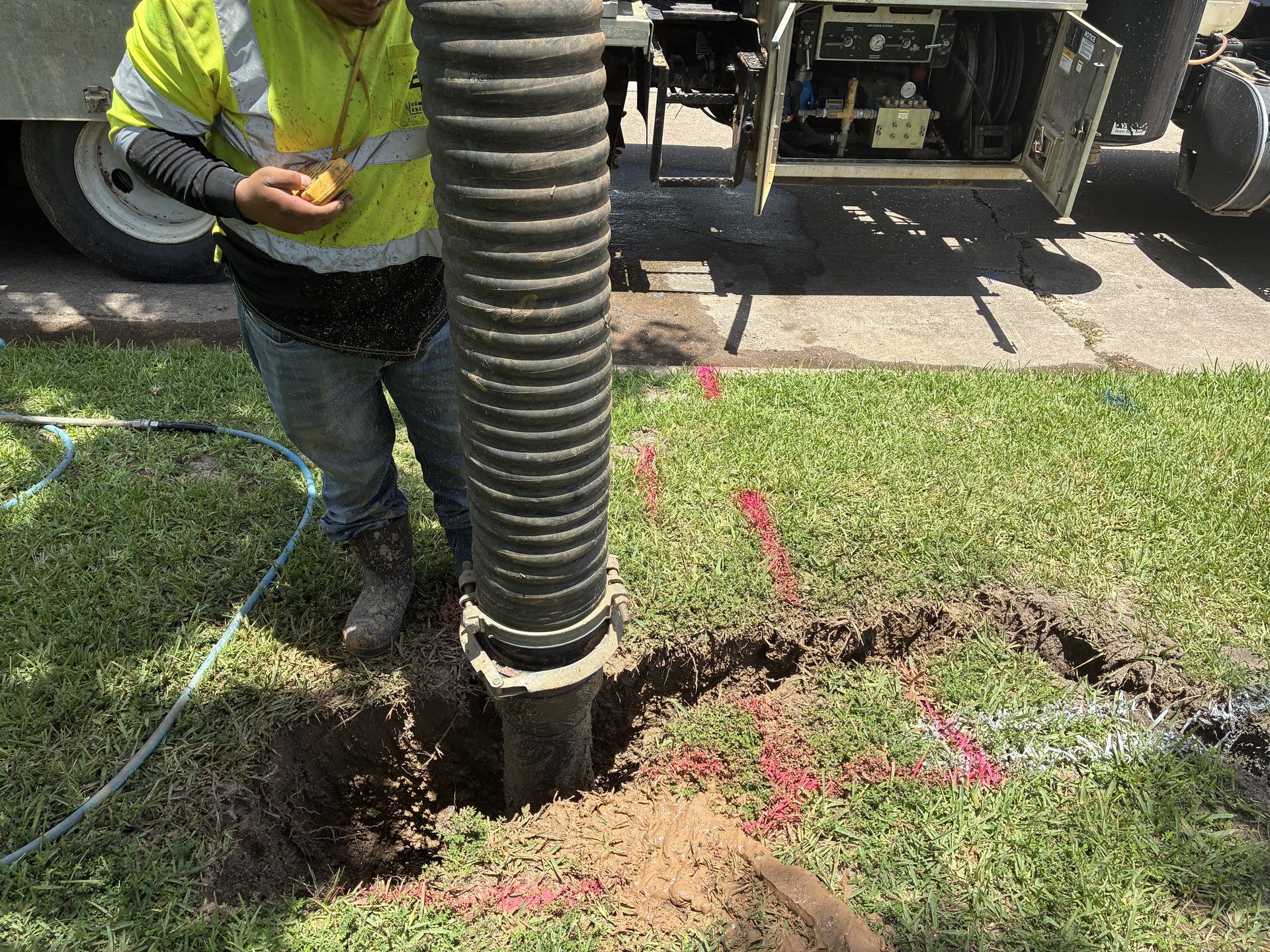
Locating tells you where a utility runs. It does not tell you how deep it sits, what it is made of, or whether the record drawing was right. Vacuum excavation opens a clean test hole and puts eyes on the actual pipe before your crew commits to a bore path or a trench line.
A locate is a horizontal answer to a vertical question.
Electromagnetic locating and GPR tell you where a line runs across a site. Neither one measures true depth reliably. Depth readings from a locator are estimates, and they drift with soil moisture, congestion, and signal bleed from parallel lines.
When a bore has to cross under an existing line with a required separation, or a trench has to thread between two utilities, an estimate is not enough. A vacuum excavated test hole exposes the actual utility so depth, diameter, material, and condition get recorded as measured fact instead of an inference.
- True depth to top of pipe
- Pipe diameter and material
- Line condition and coating
- Clearance between crossing utilities
- Confirmation that the located line is the line you think it is
A locate narrows the risk. A test hole removes it.
Where a Test Hole Earns Its Cost
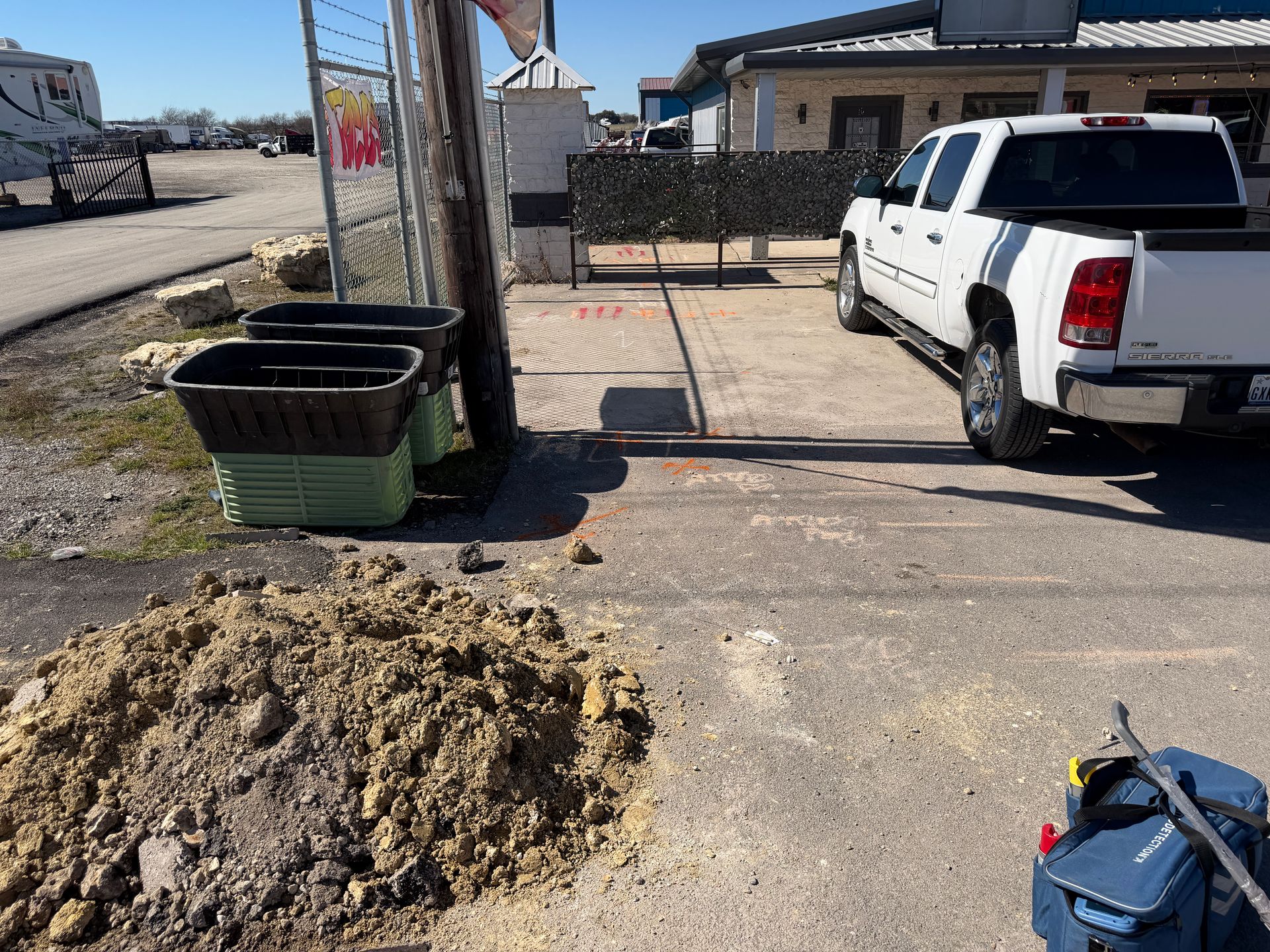
Potholing is not required on every scope. These are the situations where skipping it is where projects get expensive.
Directional Bore Crossings
Bore paths that cross existing utilities need verified clearance at the crossing point, not an estimated depth from the surface.
Congested Utility Corridors
Where several lines run parallel and signal bleed makes locator depth readings unreliable, exposing the line settles it.
Design and Preconstruction
Engineers who need measured elevations for a utility conflict analysis get surveyed test hole data instead of assumed cover.
Air and water. Not a backhoe bucket.
Vacuum excavation breaks up soil with pressurized air or water and lifts it into a debris tank, so the utility gets exposed without the strike risk of mechanical digging.
Send the Address & ScopeFrom Locate to Verified Depth
Potholing follows the locate. It does not replace it.
Locate and Mark First
We run EM and GPR across the work area and mark what is there. You cannot safely pothole a line you have not found.
Agree the Test Hole Points
We confirm with you exactly where depth matters, usually at crossings, tie-ins, and design conflict points, so you pay for holes that answer real questions.
Excavate and Expose
Pressurized air or water breaks up the soil and a vacuum lifts it clear, exposing the utility without contacting it.
Record and Restore
Depth, diameter, material, and position get recorded and tied to GPS. The hole is backfilled and the surface restored.
Vacuum Excavation Questions
What is the difference between potholing and vacuum excavation?
Why can't you just use the depth reading from the locator?
Does vacuum excavation damage the utility?
Do I need a locate before potholing?
How big is the hole and who restores it?
Can you tie test hole depths to survey coordinates?
Have a bore crossing you need verified?
Send the address, the scope, and where depth matters. We will come back with a test hole plan.
Ready to schedule vacuum excavation?
Send the address and scope. We will come back with a test hole plan, a mobilization date, and what to expect on site.
